
Many people believe that replacing a lost tooth is just about placing a metal post into the jaw. However, the true foundation for a successful dental implant is the density and quality of your jawbone. Understanding this connection is the first step toward restoring your smile safely and effectively.
1. Why is bone density important for dental implants?
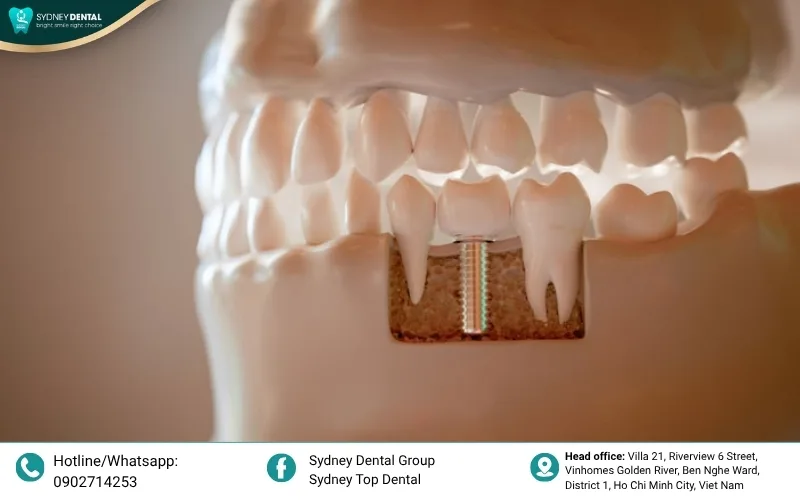
A dental implant needs a solid environment to bond firmly with your jawbone through a process called osseointegration. If the bone is not dense enough, the implant will not have the necessary support to stay stable over time.
1.1. The role of the jawbone as an “anchor” for the implant
The jawbone acts just like the foundation of a house, providing the primary strength for the tooth replacement. When the bone is thick and dense, it holds the metal post tightly, preventing any movement during chewing. Without this strong anchor, even the best dental implant could fail or become loose.
A stable anchor ensures that the pressure from eating is distributed evenly across your jawbone. This helps stimulate the bone cells to stay healthy and strong after the procedure. If the foundation is weak, the entire structure of the implant is at high risk of failure.
1.2. What happens if bone density is not sufficient?
If the bone is too thin or soft, the implant cannot achieve “primary stability” during the surgery. This means the post might wiggle or fail to fuse with the bone, leading to discomfort or even the loss of the implant. In many cases, a low-density jawbone requires additional medical procedures before an implant can be placed safely.
When the bone is insufficient, the surgeon may need to add bone grafting material to reinforce the area. Skipping this step often leads to complications like infection or implant rejection by the body. Investing time to assess your bone health ensures that your investment in a new tooth lasts for many years.
2. Classifying jawbone density using the Misch Scale (D1-D4)
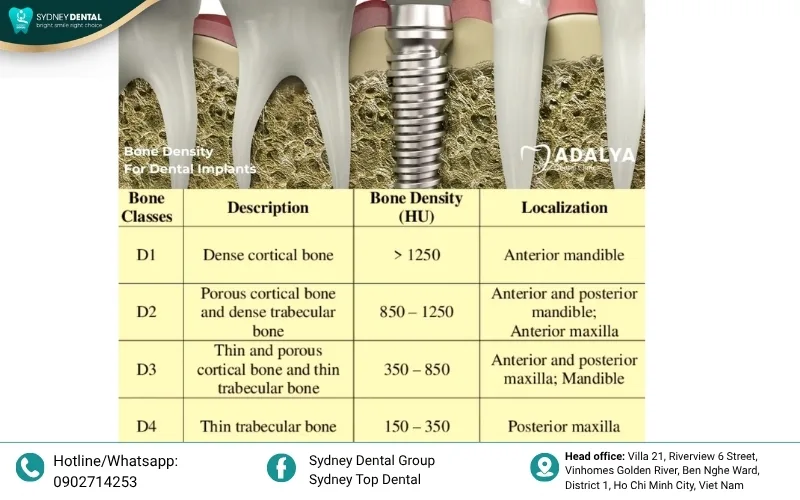
Dentists use the Misch classification system to group bone types into four categories, from D1 to D4. This classification helps doctors predict how well an implant will bond with the patient’s specific bone structure.
2.1. Bone density D1, D2: Ideal for implants
D1 and D2 bones are considered the “gold standard” for successful dental implant placement. They are dense, compact, and provide excellent support for the implant post right from the start.
- Characteristics: High mineral content and strong cortical walls.
- Signs: Very stable during drilling; allows for a quick and predictable healing process.
Patients with D1 or D2 bone density usually experience a smooth, fast recovery after their surgery. Because the bone is so strong, it grabs the implant firmly, which often reduces the overall treatment time. This is the best-case scenario for any dental implant patient.
2.2. Bone density D3, D4: Special considerations for doctors and patients
D3 and D4 bones are softer, often described as “spongy” or “porous,” which presents a challenge for the surgeon. These types of bone require a more delicate surgical approach to ensure the implant stays in place.
- Characteristics: Low density, thin cortical layer, and high amounts of bone marrow spaces.
- Signs: The bone feels soft during the drilling process, requiring specialized surgical techniques for stability.
Because the bone is soft, the surgeon must be very careful to avoid overheating or damaging the area. Using specific surgical tools can help increase stability even in these softer bone types. Patients with this bone density might need extra healing time to ensure the implant integrates perfectly.
3. How to know if your bone density meets the standard?
The only way to accurately evaluate your bone is through modern diagnostic imaging. A quick physical exam is not enough; you need advanced technology to see what is happening inside your jaw.
3.1. The vital role of CBCT imaging
CBCT (Cone Beam Computed Tomography) provides a highly detailed 3D view of your jawbone structure. It allows the dentist to measure the exact height and width of your bone before starting any procedure. This technology makes the entire process much safer by helping the doctor plan the best position for the implant.
With a 3D image, the dentist can identify hidden issues like sinus proximity or nerve positions that an X-ray might miss. This level of planning prevents surprises during surgery and drastically increases the success rate. It is the most important tool for ensuring your dental implant is placed in the best possible site.

3.2. Warning signs of jawbone loss (for long-term tooth loss)
If you have been missing teeth for a long time, your jawbone may have already started to shrink away. Recognizing these signs early can help you get treatment before the bone loss becomes too severe. Signs of bone loss:
- Sunken appearance of the cheeks or lips.
- Changes in the way your dentures fit or move.
- Noticeable shifting or tilting of the remaining natural teeth.
When teeth are missing, the bone is no longer stimulated, so the body naturally resorbs it over time. This process is silent and painless, which is why many people don’t notice it until they try to get an implant. If you see any of these signs, you should visit a dentist to check your bone levels immediately.
4. Solutions for patients with low bone density (D4)
If your density is low, you are not out of luck; there are modern solutions to build a strong foundation. Advances in dental medicine have made it possible to treat even the most challenging bone cases successfully.
4.1. Bone grafting and sinus lifting: Process and benefits
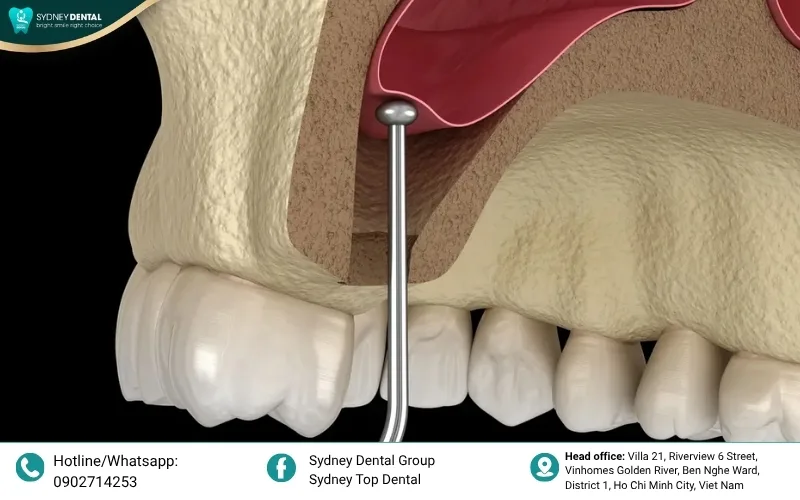
A bone graft adds synthetic or natural bone material to the site to increase volume and density. A sinus lift is a similar procedure that adds bone to the upper jaw, near the sinus, to provide a deeper anchor. These procedures act as a bridge, allowing your natural bone to grow and eventually support an implant.
The benefit is a stronger, more stable foundation that will last a lifetime. While it adds a little time to your treatment, the result is a secure tooth replacement that looks and feels natural. It effectively turns a “no” situation into a “yes” for your dental implant.
4.2. Choosing the right implant for soft bone
When the bone is soft, dentists often select specific types of implants designed to grip the bone better. These implants are engineered to be more aggressive or tapered, helping them “lock” into place even in D3 or D4 bone. Recommended Implant Types:
- Wide-diameter implants to increase surface contact area.
- Aggressive-thread implants that provide mechanical locking.
- Surface-treated implants that speed up the bone-to-implant connection.
By using these specialized designs, surgeons can achieve stability even when the natural bone density is low. Choosing the right hardware is just as important as the surgical technique itself. Your dentist will recommend the best model based on your unique bone density results.

5. Expert advice for long-term implant success
To ensure your implant lasts for a lifetime, you must follow your dentist’s post-operative instructions carefully. Keep the area clean and attend all follow-up appointments to monitor how your bone is healing around the implant. A healthy lifestyle, including a balanced diet, also supports your body’s ability to maintain strong bone mass.
Consistency is the key to maintaining the bond between your jaw and the implant. Even after the final crown is placed, remember that your dental implant still requires regular brushing and professional cleanings. Treat your implant like a natural tooth, and it will serve you well for many decades.
If you ever feel discomfort or notice changes around your implant site, contact your dentist right away. Early detection of any problem is the best way to protect your investment and maintain your beautiful smile. Staying proactive ensures that you enjoy the benefits of your implant without any long-term worries.
Understanding your jawbone density is the most critical step to ensuring your dental implant stays strong for years to come. By using modern tools like CBCT and choosing the right surgical path, you can achieve a perfect, long-lasting result. If you are considering dental implants, talk to your dentist today to start your journey toward a healthy smile.
Sydney Top Dental
📍 Address: No. 21, Riverview 6 Street, Vinhomes Golden River Villas, Ben Nghe Ward, District 1, Ho Chi Minh City
📞 Hotline: 090 271 42 53
🌐 Facebook: Sydney Top Dental


Our Doctors
Get a Free Initial Consultation