
- 1. What is bone loss and why does it affect dental implants?
- 2. Can you get dental implants with severe bone loss?
- 3. Advanced techniques for bone loss patients
- 4. The process of placing implants for bone-loss patients
- 5. Important considerations for optimal results
- 6. Frequently Asked Questions (FAQ)
Losing teeth often leads to a silent, progressive condition known as bone resorption, which can cause significant anxiety about your oral health. Many patients mistakenly believe that once the jawbone has diminished, the opportunity for a stable, permanent smile has vanished forever. However, I want to reassure you that severe bone loss is not the end of the road for dental implants.
1. What is bone loss and why does it affect dental implants?
Bone resorption occurs when the jawbone no longer receives the necessary stimulation from tooth roots to maintain its density. This loss of structural integrity creates a challenging environment for placing traditional dental implants securely.
1.1. Causes of bone loss
The primary cause of bone loss is the extraction or loss of natural teeth, which stops the natural pressure on the jawbone. Other contributing factors include:
- Periodontal (gum) disease: Chronic infection that destroys the bone supporting the teeth.
- Aging: Natural physiological changes in bone density over many years.
- Trauma or injury: Physical damage to the jaw area that interrupts blood supply and bone regeneration.
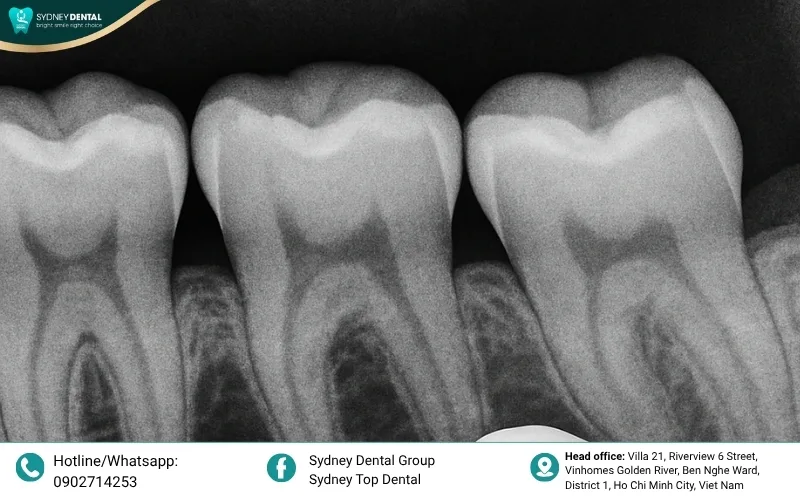
1.2. Why is enough bone necessary for successful dental implants?
A dental implant acts as an artificial root, requiring a sufficient volume of dense, healthy bone for successful osseointegration. Without this foundation, the implant lacks the necessary stability to withstand the daily forces of biting and chewing. Think of the implant as a sturdy pillar and the bone as the soil; if the soil is too shallow or weak, the pillar cannot stand tall.
Sufficient bone volume also ensures that the implant is perfectly positioned for both functional efficiency and aesthetic appeal. When the bone is thin, the implant may not integrate properly, leading to potential movement or even failure. Therefore, bone quality is the most critical biological factor for a long-term, successful dental restoration.
For patients with severe bone loss, modern dentistry offers advanced surgical techniques to “rebuild” the foundation before implant placement. By addressing the volume deficiency, dentists can restore the jaw to a state that supports a permanent, natural-feeling implant. This biological stability is exactly what ensures your new smile will last for decades to come.
2. Can you get dental implants with severe bone loss?
Modern dental technology has revolutionized treatment, making it possible for almost anyone to receive implants regardless of their initial bone condition. Even with advanced resorption, innovative grafting and surgical methods can successfully prepare your jaw for a beautiful, functional smile.
2.1. Assessing bone condition via CT Cone Beam
The first essential step is performing a high-resolution 3D CT Cone Beam scan to visualize your jaw’s exact structure. This imaging allows your dentist to measure the precise height and width of the available bone. By mapping the anatomy in 3D, the surgeon can plan the exact placement of your implants with unmatched accuracy.
This diagnostic phase is crucial for identifying how much bone has been lost and which specific areas require grafting. It minimizes surgical risks by helping the team avoid nerves and sinus cavities. With this clear roadmap, your journey toward regaining your smile becomes predictable, safe, and highly effective.
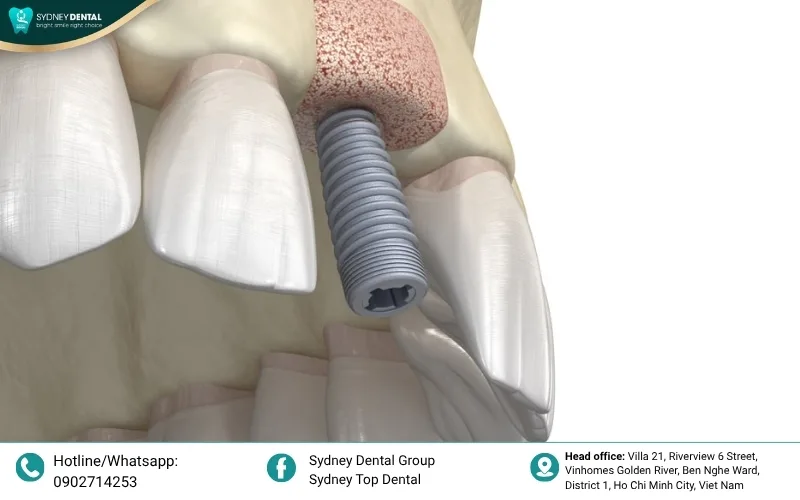
2.2. Immediate cases vs. cases requiring bone grafting
Some patients with mild to moderate bone loss might be candidates for implants immediately, provided the bone is dense enough to hold the device. However, patients with severe bone loss usually require a preparatory phase to rebuild the jaw structure before the implants can be placed. This decision is strictly based on your individual bone health assessment during your initial consultation.
If your bone structure is deemed insufficient, the dentist will recommend a grafting procedure to provide the necessary support. While this adds a step to the process, it ensures that your implants remain stable for a lifetime. Prioritizing this foundation is the safest way to guarantee that your investment in your smile is protected.
3. Advanced techniques for bone loss patients
To overcome bone deficiency, specialized procedures are employed to reconstruct the jaw and ensure a secure fit for your new implants.
3.1. Bone grafting (Autologous & Synthetic)
Bone grafting involves placing bone material into areas where the jaw has receded to stimulate new growth. This creates a solid, stable base that mimics your natural anatomy and provides a secure anchor for the titanium implant. After a healing period, the graft integrates with your own bone, restoring the volume needed for successful placement.
- Target: Patients with thin or narrow jaw ridges.
- Pros: Highly predictable, allows for standard implant placement, restores jaw function.
- Cons: Requires a longer total treatment time; some post-op swelling is normal.

3.2. Sinus lift (for the upper jaw)
A sinus lift is a common procedure performed when bone loss in the upper jaw makes it impossible to place implants without interfering with the sinus membrane. The dentist gently lifts the sinus floor and places grafting material underneath to create more height for the implant. This simple, effective surgery opens the door to dental implants for those who previously had no upper bone support.
- Target: Patients with missing upper back teeth and limited bone height.
- Pros: Allows for long implants in the back of the mouth, high long-term success rate.
- Cons: Requires a temporary adjustment to eating habits; minor recovery time.

3.3. All-on-4 / All-on-6 (Minimizing the need for grafts)
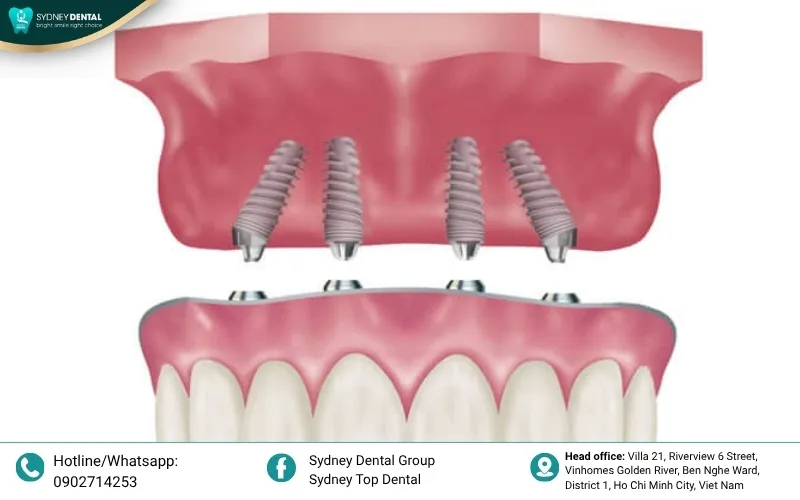
The All-on-4 or All-on-6 technique uses only four to six precisely angled implants to support a full set of fixed teeth, often bypassing the need for extensive grafting. By tilting the implants into the densest areas of the jaw, the surgeon can secure a strong bridge even in patients with significant bone loss. It is an efficient, fast solution that provides immediate results and a permanent, stable bite.
- Target: Patients with extensive tooth loss and low jawbone volume.
- Pros: Saves time and money by avoiding major grafting; allows for “teeth in a day.”
- Cons: Requires precise surgical skill; specific requirements for initial bone density.
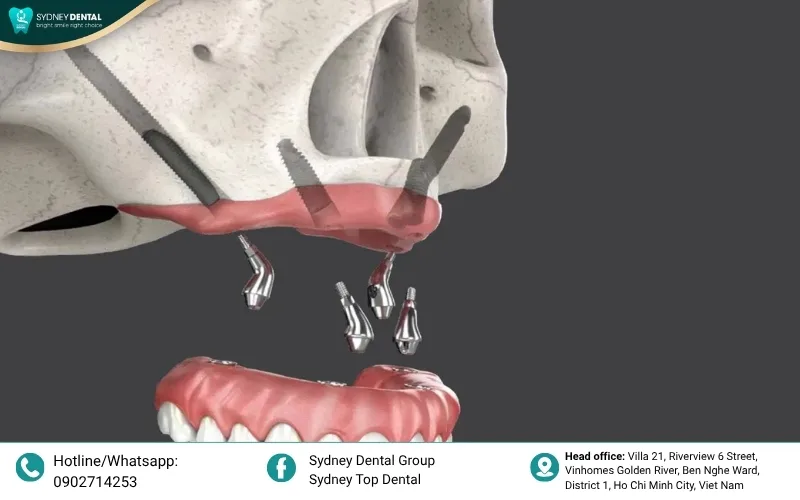
3.4. Zygoma implants (For long-term severe bone loss)
Zygoma implants are extra-long implants anchored directly into the zygomatic bone (cheekbone) instead of the jawbone. This technique is specifically designed for patients who have suffered such severe bone loss that traditional grafting is not possible or desirable. It provides a rock-solid, permanent solution for those who were previously told they were not candidates for dental implants.
- Target: Patients with extreme upper jaw bone atrophy.
- Pros: No need for bone grafting, high immediate stability, long-term durability.
- Cons: Specialized procedure requiring highly trained surgeons; higher technical complexity.
Lean more: Zygomatic Implant Vietnam: The “Gold” Solution for Severe Bone Loss
4. The process of placing implants for bone-loss patients
- Consultation & 3D Imaging: A thorough exam and 3D scan to assess your bone volume.
- Bone Preparation: Grafting or sinus lift surgery to rebuild the foundation if needed.
- Healing Period: Allowing the graft to fuse with your natural bone (usually 3-6 months).
- Implant Placement: Precise surgical insertion of the titanium implants.
- Restoration: Attaching your custom-made, natural-looking permanent teeth.

5. Important considerations for optimal results
Achieving a successful outcome requires careful planning and a commitment to both the clinical team and your own oral hygiene. By following professional guidance, you can ensure your smile remains healthy and strong for many years.
5.1. Choosing an expert dentist
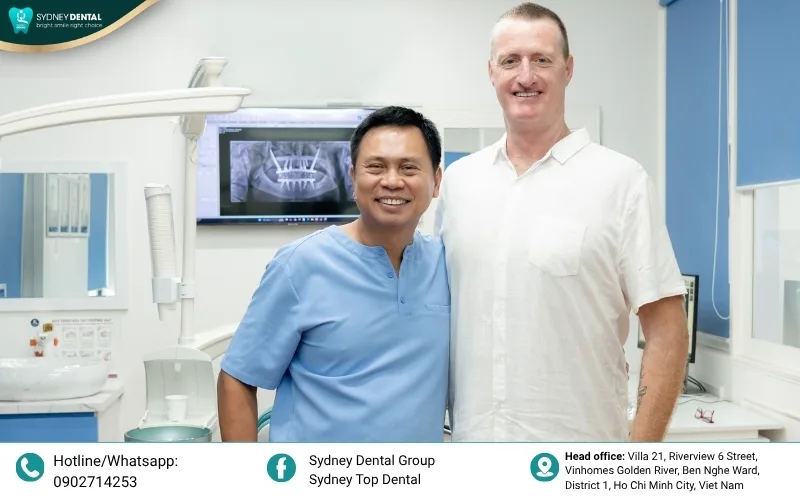
The success of your implant depends heavily on the surgeon’s expertise, so prioritize those with advanced training.
- Criteria:
- Extensive experience with complex bone grafting and implant surgery.
- Access to high-end 3D imaging and navigation technology.
- A portfolio of successful cases involving severe bone loss.
5.2. Post-operative care
Proper aftercare is essential to ensure that your graft and implants heal without complications.
- Steps:
- Maintain excellent oral hygiene using a soft brush as directed.
- Attend all follow-up appointments to monitor integration progress.
- Follow a balanced diet and avoid hard foods during the initial healing phase.
6. Frequently Asked Questions (FAQ)
6.1. Is bone grafting painful and how long does it take to heal?
Most patients experience only mild discomfort managed by medication, with initial healing taking about 2 weeks and full integration occurring over a few months.
6.2. What is the cost of bone grafting and dental implants?
Costs vary based on the amount of bone needed and the complexity of the surgery, which is why a personalized 3D scan consultation is essential for an accurate quote.
6.3. Can I choose a dental bridge instead of an implant?
While a bridge is an option, it requires altering healthy teeth and does not prevent further bone loss like an implant does, making implants the superior long-term choice.
6.4. What is the success rate of implants on grafted bone?
With modern techniques and materials, the success rate for implants placed in grafted bone is extremely high, often exceeding 95-98%.
Even with severe bone loss, you don’t have to settle for a life without a full, confident smile. Modern advancements have made it easier than ever to rebuild your foundation and achieve a permanent, beautiful set of teeth. Don’t wait—schedule your professional consultation today to discover your path to a new smile!


Our Doctors
Get a Free Initial Consultation